
The Digital Front Door and the Room Beyond It

Updated: Sep 12
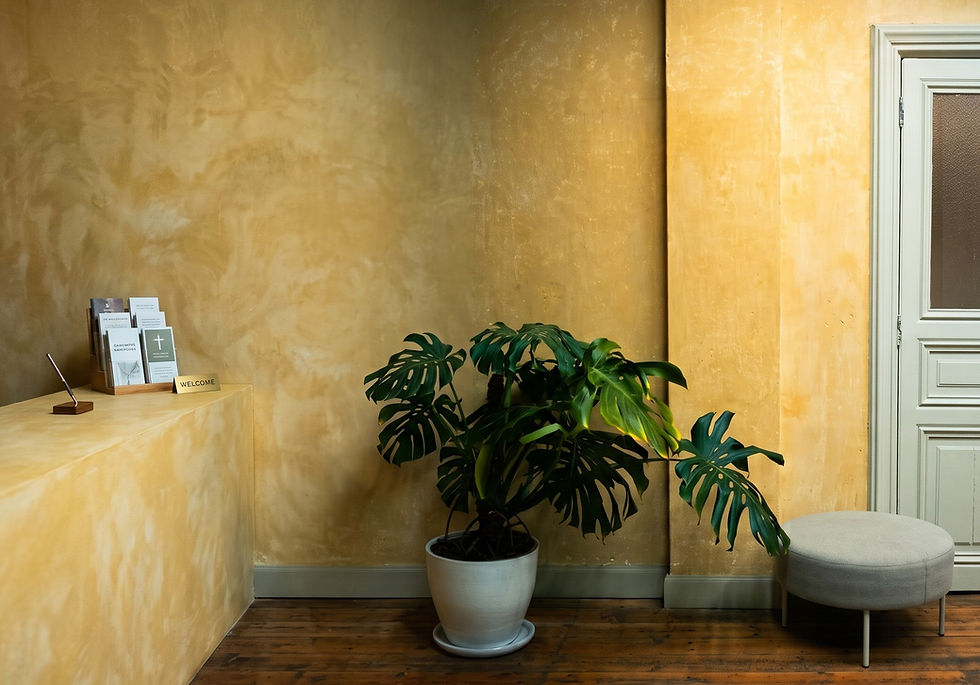
TLDR: A church's website can be a wide-open "front door," and someone can still not be able to be in the room. Real welcome means digital and physical access working together, from visiting a website, to trying out the live service, to being discipled, and to being the discipler.
Before They Ever Arrive
There's an idea that comes up in conversations about church accessibility: Your website is your digital front door.
It's a good metaphor, and it's true. Long before someone walks into your building, they've usually already visited you online - checking service times, reading about your beliefs, deciding whether this might be a place they could belong. For someone who is neurodivergent, blind or low-vision, d/Deaf or hard-of-hearing, has a color vision deficiency, or can't use a mouse, that visit can go one of two ways before they've ever pulled into your parking lot.
A cluttered, auto-playing, unpredictable website can be genuinely overwhelming for someone who is neurodivergent, long before they ever reach your "About" page. A site that can't be navigated by keyboard alone quietly closes the door on anyone who can't use a mouse. An announcement graphic with no alt text, or text laid over a busy background with poor contrast, gives a sighted visitor information that a screen reader user or low-vision person never gets. Archived sermon videos with no captions tell a d/Deaf or hard-of-hearing visitor, before they ever show up, that they'll be on their own once they get there. A Bible study PDF with no accessibility tags might as well be blank to a person hoping to grow through it.
None of this is super difficult or expensive to fix. And when churches get it right, it shows. I've seen websites note whether the building is wheelchair accessible, or mention ASL interpretation. Others have named a sensory or quiet room alongside the nursery and the coffee bar. And one I'd love to see in the future: Emailing song lyrics ahead of a service by request. Small notes like these tell a visitor something before they ever arrive, "We already thought about you. We planned for you to be here."
That's the digital front door, and it matters. But a front door is still just a door.
What Happens After Entering
My husband has stayed in the lobby of more than one church, experiencing the service through a speaker or a screen, because staying in the sanctuary could mean ringing ears or a headache for days afterward. At four different churches we've visited, we've run into some version of the same barriers: Sound systems with a piercing edge on certain frequencies, volume that climbs past what his ears can absorb, blue stage lighting that makes him dizzy and steals his depth perception. Cologne with one specific ingredient can send his lungs into distress for days. I've done this to him myself just by using hairspray.
None of that shows up on a website audit. The digital front door was wide open for him. He just couldn't stay in the room.
So most weeks, I face a small, quiet choice: sit with him in the lobby, or go into the sanctuary without him, to worship and read the Word together with our church family.
I do want to be clear - we are not looking for a different church. We love the people there, and so does our daughter. We've found real community, the kind you don't walk away from just because it might have imperfections.
Ministered To, or Ministering
All of this has caused me to ask harder questions than, "Can someone get in the door?" What would it take for a blind person to be on staff? For someone with epilepsy to lead worship from the stage? For someone with a vestibular disorder (a condition that affects balance and can cause dizziness) to run media during a kids' service? What are the tech-related reasons some of your members only ever sit in the lobby, and never come in?
To me, real inclusion means people with disabilities are doing the ministry, not just being ministered to. Access gets someone in the building. Belonging is being trusted to lead, to serve, to be needed - not just accommodated.
This Isn't New - It's a Continuation
If you're already doing some version of this work, or you already have a heart for it, none of this is meant as new instruction. It's a continuation of what you've already started caring about. The whole spirit behind "Progress over Perfection" is that you don't need to have this completely solved to be doing it right. You just need to take the next step.
That's also what Level The Paths exists to do. We help make Bible Study PDF booklets screen-reader friendly. We consult on the media and visuals shown during services: Color contrast, avoiding color-only indicators, avoiding backgrounds and animations that keep moving when someone needs stillness. We advocate for real captions during live sermons, both for the stream and for the screen in the lobby, not just the polished version that goes up online later. We look for alternatives to click-and-drag interactions and voice-only communication, so more people can actually operate what you've built.
The Room, Not Just the Door
An open front door gets someone into the building. What I want for my husband, and for everyone like him in every church, is for him to be welcomed and able to participate in what's happening, wherever his body needs him to be that day. Not just invited in, but part of what happens once he's there.
What might it look like, in your own church or organization, to move from, "They can get in," to, "They belong here?" I'd love to hear where you're already working on bridging that gap. Let's keep looking for it together.
Leveling a path takes more than good intentions; it takes training, technical know-how, and the systems that keep both in place over time. That's the gap Level The Paths exists to fill: Training your team, doing the technical work, and helping set up the systems that make it stick, so welcoming people well becomes how a church normally operates, not an extra to squeeze in.
Author's Note: I used AI tools to help organize and draft this piece from my own reflections and experiences. The final content reflects my own perspective, my experience, and my professional expertise in digital accessibility.

Comments